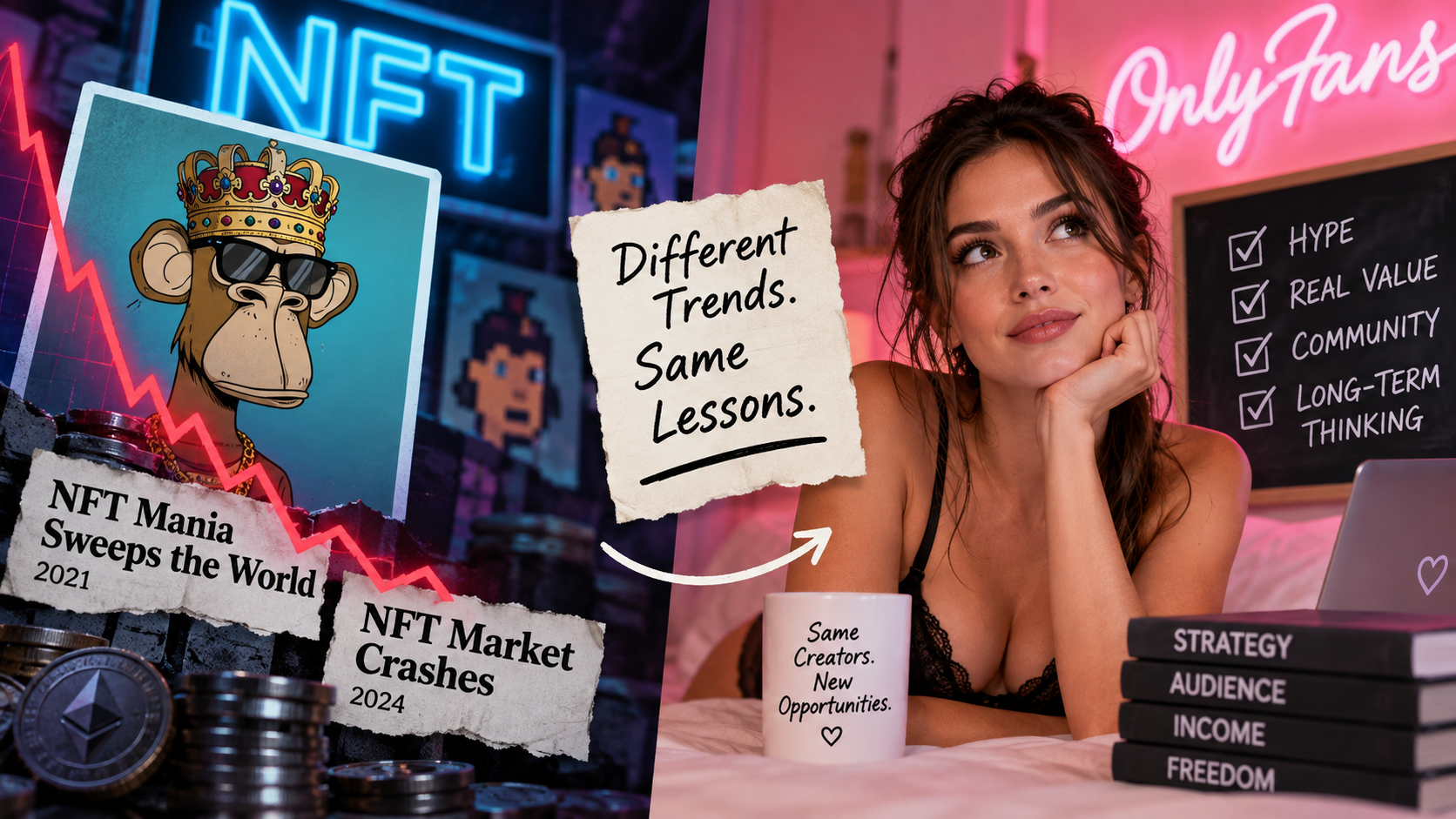
For a brief moment, NFTs were going to change everything. It was all anyone would talk about for months.
Celebrities were buying cartoon apes. Digital images were selling for millions of dollars. Companies rushed to launch NFT collections, crypto investors bragged about their JPEG portfolios, and people who had never shown the slightest interest in digital art suddenly became very concerned about which blockchain their monkey lived on.
If you were online in 2021, it was almost impossible to avoid.
Then the party ended.
NFTs didn’t completely disappear, and an active market still exists today. But the enormous speculative frenzy that made NFTs a mainstream cultural phenomenon collapsed spectacularly. DappRadar estimates that the art NFT market generated approximately $2.9 billion in trading volume in 2021. By 2024, that had fallen to about $197 million, down roughly 93%.
That doesn’t mean NFTs were entirely useless or that nobody will ever make money with them again. In fact, NFT trading showed signs of renewed activity in 2025, particularly as prices fell and projects began emphasizing utility over pure speculation.
But the original NFT gold rush is over. And strangely enough, I think adult content creators can learn quite a bit from what happened.
Lesson #1: Hype Is Not the Same Thing as Demand
This might be the biggest lesson of the entire NFT boom. For a while, people weren’t necessarily buying NFTs because they desperately wanted the underlying artwork. They were buying because they believed someone else would pay more for it later.
That distinction matters. If someone pays $5,000 for an NFT because she believes she can sell it for $10,000 next month, the product isn’t necessarily giving her $5,000 worth of enjoyment. She’s making a speculative bet.
Once enough people stop believing prices will continue rising, that demand can disappear incredibly quickly. Adult creators can fall into a similar trap with social media hype.
Maybe everyone suddenly says Telegram is where creators need to be. Then it’s Snapchat. Then Reddit. Then TikTok. Then some new creator platform promises to replace OnlyFans. Then somebody announces that AI girlfriends are going to destroy human creators by Thursday afternoon.
Everyone rushes toward the shiny new thing because everyone else appears to be rushing toward it. Sometimes that works. More often, the hype cycle ends, and creators discover they spent months building something that never generated meaningful revenue. Before chasing a trend, ask a much less exciting question: Is there actual customer demand here? That’s what matters.
Lesson #2: Scarcity Doesn’t Automatically Create Value
NFT projects became obsessed with scarcity.
- Only 10,000 exist!
- Only 500 exist!
- Only 50 exist!
That sounds impressive until you remember something important: something being rare doesn’t automatically make it valuable. I could draw a terrible picture on a napkin tonight and promise never to make another one. Congratulations, you’ve just discovered the rarest Kelli Roberts napkin collection in existence.
That doesn’t mean anyone wants it. Adult creators sometimes make the same mistake when selling content. “Only available for 24 hours” can create urgency. “Only ten available” can create scarcity. “I’m deleting this tomorrow” can encourage someone already interested to decide.
But scarcity amplifies existing desire. It doesn’t magically create desire where none existed. Your fan has to want the thing first. This is why constantly screaming LIMITED TIME ONLY!!! eventually stops working. If every PPV message is an emergency and every video is the rarest thing you’ve ever released, your subscribers eventually learn that none of those deadlines mean very much.
Create desire first. Use scarcity second.
Lesson #3: A High Price Doesn’t Prove Something Is Valuable
During the NFT boom, astonishing sale prices became part of the marketing.
An NFT sells for $100,000, and suddenly everyone talks about it. Another sells for $500,000. Then Beeple’s Everydays: The First 5000 Days sells for $69.3 million at Christie’s, and NFTs become international news.
Prices themselves became advertisements. Adult creators need to watch out for the same psychological trap.
Charging $100 for a PPV doesn’t mean you’ve created $100 worth of value. Charging $50 a month for your subscription doesn’t automatically position you as “premium.” Your customers determine value.
A $50 PPV that hundreds of subscribers happily purchase might be tremendously underpriced. A $20 PPV nobody buys might be overpriced. The number you type into the price box isn’t your value. Your customer’s willingness to buy is.
Lesson #4: Speculators Aren’t the Same as Fans
One of the biggest problems with the NFT boom was that many buyers weren’t particularly interested in the projects they were buying. They were interested in making money.
That created enormous communities filled with people who appeared enthusiastic but had very different motivations. As soon as the opportunity to make easy money disappeared, many of those supposedly passionate communities disappeared with it.
Creators should think about the difference between followers and fans in exactly the same way.
You can have 500,000 TikTok followers who love watching your free videos but have absolutely no intention of subscribing to your OnlyFans.
Meanwhile, another creator might have 30,000 highly targeted followers and convert significantly more of them into paying subscribers.
Follower count looks impressive. Customer intent pays the bills. That’s why I don’t believe creators should judge their success solely by follower counts, likes, or views. Those numbers matter, particularly for distribution, but they’re only part of the funnel.
The important question is what those people eventually do.
Lesson #5: Community Is Valuable, But Only If It’s Real
One thing the NFT industry got absolutely right was community. Successful projects didn’t simply sell a digital image. They created Discord servers, private groups, events, inside jokes, identities, and a sense that buyers belonged to something.
That idea is incredibly valuable for adult creators. Your biggest advantage over traditional pornography isn’t necessarily the content itself. The internet already contains more adult content than any human being could watch in several lifetimes.
Your advantage is you. A subscriber can watch pornography anywhere. He subscribes to your OnlyFans because he wants additional access to a particular person. Remembering someone’s name matters. Answering messages matters. Asking questions matters. Creating recurring jokes matters. Making subscribers feel recognized matters.
That relationship creates something a random tube-site video can’t easily duplicate. NFT projects often call this “community.” Creators might call it fandom, but the underlying psychology isn’t terribly different.
People spend more when they feel connected.
Lesson #6: Utility Matters Once the Novelty Wears Off
Early NFTs could sometimes sell simply because they were NFTs. Eventually, that stopped being enough.
As the market matured, projects increasingly began talking about utility. What does owning this token actually get you? Does it provide access to something? Are there membership benefits? Does it unlock experiences? Is there some reason to own it beyond hoping another buyer eventually pays more?
DappRadar noted this shift during the NFT market’s renewed activity in 2025, describing the market as increasingly focused on utility, brands, and real-world applications rather than simply collectible JPEGs.
Adult creators should ask themselves the same question about subscriptions. Why should someone keep paying you next month? The answer can’t simply be, “Because they paid me this month.”
Maybe subscribers receive frequent new content. Maybe your page is unusually interactive. Maybe you have a fantastic messaging strategy. Maybe you offer subscriber-only livestreams, polls, games, behind-the-scenes material, or personalized attention.
Whatever it is, subscribers need continuing reasons to stay. Getting someone to subscribe is acquisition. Giving them reasons not to leave is retention. And retention is where sustainable businesses are built.
Lesson #7: Recurring Revenue Beats One Big Payday
NFT culture celebrated enormous individual transactions. Someone sells an NFT for $2 million and gets headlines worldwide. But sustainable creator businesses aren’t usually built around one giant sale.
They’re built around thousands of smaller transactions repeated over time. A subscriber who pays you $10 isn’t particularly exciting. But if that person stays for twelve months, buys several PPVs and occasionally sends tips, he may become worth hundreds of dollars.
Multiply that by hundreds or thousands of subscribers, and you have a business. This is why I tell creators not to obsess exclusively over subscription prices. Your real goal should be increasing lifetime subscriber value.
How much does the average subscriber spend from the moment he joins until the moment he leaves? Improve that number and your business can grow even without dramatically increasing your audience.
Lesson #8: Easy Money Attracts Bad Advice
Whenever people believe there’s easy money somewhere, an entire industry appears to teach them how to get it.
- NFTs had gurus.
- Crypto had gurus.
- Dropshipping had gurus.
- Amazon FBA had gurus.
- And OnlyFans definitely has gurus.
Suddenly everyone has a secret method. Everyone knows the algorithm. Everyone has screenshots showing astronomical income. Everyone can turn you into a millionaire if you’ll simply buy the course, hire the agency, or send them a percentage of your income forever.
Some people providing these services are excellent. Others make more money selling the dream than they ever made doing the thing they’re teaching. Before taking business advice, ask yourself a simple question: How does this person know what they’re telling me? Experience matters. Data matters. Testing matters.
Confidence isn’t evidence.
Lesson #9: Don’t Build Your Entire Business Around Someone Else’s Platform
NFT creators learned this lesson with marketplaces. Social media creators learn it every time an account gets suspended, an algorithm changes or a platform suddenly decides it doesn’t particularly want adult creators anymore.
OnlyFans creators should understand this better than almost anyone.
- Instagram doesn’t belong to you.
- TikTok doesn’t belong to you.
- X doesn’t belong to you.
- Reddit doesn’t belong to you.
And your OnlyFans account doesn’t belong to you in the same way your own website, domain, or customer database does. These platforms can be incredibly valuable, and I’m certainly not suggesting you stop using them. Use them aggressively when they’re producing results.
But diversification matters. Build audiences in multiple places. Build a recognizable name. Secure your domains. Create ways for people to find you again if one social account disappears. Platforms are distribution channels. You are the brand.
Lesson #10: Fads Can Still Make You Money
Here’s where I disagree with people who look back at NFTs and conclude the whole thing was pointless. Plenty of people made real money during the NFT boom. Just because something is temporary doesn’t mean there’s no opportunity in it.
Trends can be incredibly profitable if you recognize them. Adult creators should absolutely experiment with new platforms, technologies, content styles, and promotional strategies. If something starts exploding tomorrow and your audience is there, I want you testing it.
But there’s a huge difference between using a trend and building your entire business around the assumption that the trend will last forever. Use the attention while it’s available. Take the money while customers are spending it. Learn what you can. Then keep building something that can survive after everyone moves on to the next shiny object.
The Real Lesson From NFTs
NFTs weren’t the first internet gold rush, and they certainly won’t be the last.
Something else will come along promising creators unlimited money, effortless growth, and an entirely new economy. Parts of it will probably be legitimate. Parts will be ridiculous. A handful of people will get incredibly rich, thousands more will rush in after hearing about them, and eventually reality will catch up with the hype.
We’ve seen this movie before. Adult content creators don’t need to avoid every fad. In fact, getting in early on the right trend can be enormously valuable. You just need to understand the difference between a trend and a business.
Trends are built on attention. Businesses are built on customers. And if you’re an adult content creator who wants to be doing this five or ten years from now, customers are far more valuable than hype.
About The Author