X (formerly Twitter) is the only platform that still lets adult content creators post pretty much what they want, so it’s only natural to focus a lot of attention on growth there. I’ve recently discussed the issues with post visibility and nudity, but today I want to talk about something else, something that could put your account at risk. I’m not just talking about shadowbanning; I mean a full ban.
If you spend enough time trying to grow on X, someone will eventually invite you into a “retweet group,” “engagement group,” “engagement pod,” or even “like for like”. The pitch usually sounds harmless: everyone drops their latest post, everyone else likes it, replies to it, and reposts it, and everybody gets more reach.
Before we get into the reasons why, let me just be clear right up front: don’t do this!!
The problem is that this isn’t organic networking. When people coordinate specifically to exchange engagement and artificially increase one another’s numbers, X considers that platform manipulation. A lawsuit X filed this month shows how seriously the company takes manipulation when money is involved.
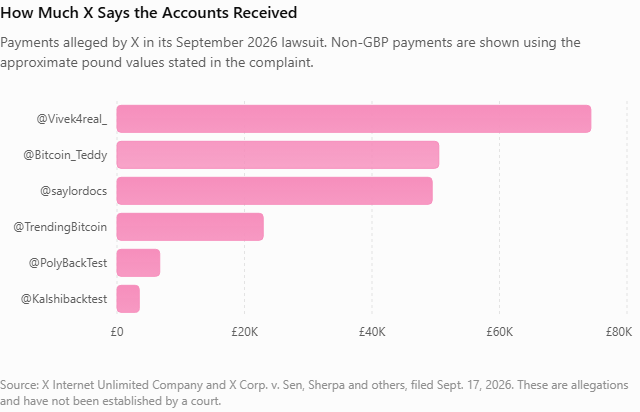
On September 17, 2026, X Internet Unlimited Company and X Corp. filed a lawsuit in the High Court of Justice in England and Wales accusing several defendants of operating a coordinated network of X accounts designed to manipulate engagement and obtain Creator Revenue Sharing payments. These are allegations contained in X’s complaint and have not been established by a court.
The case is an unusually clear reminder for creators: artificial engagement isn’t the same thing as marketing.
What is platform manipulation?
Platform manipulation is essentially an attempt to make an account, post, topic, or conversation appear more popular, active, or important than it would be through genuine user behavior.
X’s current Authenticity Policy says users may not engage in activity that artificially affects how content is discovered or amplified. Specifically prohibited behaviors include coordinating with others to exchange engagement, including likes, replies, reposts, views, follows, polls, and other X features.
That last part is important because platform manipulation doesn’t require bots.
You don’t have to purchase 10,000 fake followers from some shady website. You don’t have to run automated software. You don’t even have to pay anyone.
A group of 30 real people can manipulate engagement if they agree that every time someone drops a link, everyone else will like, reply to, or repost it to boost that person’s metrics.
The engagement may come from real people, but it isn’t organic.
This is where retweet groups become a problem
There’s an important distinction between having friends or colleagues who support your work and participating in a coordinated engagement exchange.
Imagine you’re in a group chat with 20 other creators. Someone shares a post they think is funny, you genuinely like it, and you decide to repost it. There’s nothing inherently suspicious about creators knowing one another, sharing links, recommending posts, or supporting their friends.
Now change the rules.
Everyone in the group must post a link each day. Everyone else is expected to repost it. You have to like five posts before you can submit your own. Remove members who don’t participate. Maybe there’s even a spreadsheet, bot, moderator, or checklist tracking who has completed their engagement.
That’s no longer simply a community of creators supporting one another. It’s an organized exchange designed to manufacture engagement.
X’s Authenticity Policy specifically prohibits “coordinating to exchange engagement” in features including Likes, Replies, Reposts, Views, and Follows.
The policies quoted in X’s new lawsuit are even more explicit about how the company has historically viewed this behavior. The complaint reproduces previous platform-manipulation language prohibiting what X called “reciprocal inflation,” including coordinated follows, engagement exchanges, “follow trains,” and “Repost for Repost” behavior.
So when someone tells you that a retweet group is safe because “these are real people, not bots,” they’re missing the point.
The coordination itself is the issue.
What X says happened in its new lawsuit
The allegations in X’s September lawsuit go far beyond a typical creator joining a small engagement pod.
According to the complaint, X alleges the defendants operated multiple accounts as a single coordinated network to manipulate engagement and generate Creator Revenue Sharing payments. X claims those accounts repeatedly liked, reposted, replied to, and otherwise interacted with one another in ways that created what the company describes as a false appearance of genuine human engagement.
The complaint also contains some remarkably specific examples.
| Organic engagement | Platform manipulation |
|---|---|
| Someone reposts because they like your post | Members agree to repost one another |
| Genuine replies | Required or exchanged replies |
| Someone chooses to follow you | Follow-for-follow coordination |
| Friends occasionally support one another | Engagement is compulsory or tracked (like for like) |
| Audience decides what deserves attention | Group artificially inflates the signal |
X alleges that two accounts published identical posts within two minutes of one another on October 10, 2025. On November 3, four accounts allegedly published the same phrase and image within minutes. In another example from August 13, 2026, three accounts allegedly replied to the same post within 31 seconds. Pages 12 through 16 of the complaint include screenshots illustrating some of these alleged patterns.
X further alleges that additional accounts repeatedly replied to, liked, and reposted content from the primary accounts to manufacture the appearance of genuine engagement. The complaint includes pages of screenshots showing the alleged interaction patterns.
According to X, the scheme generated at least $276,979 in Creator Revenue Sharing payments, and the company estimates that it has incurred at least another $100,169 in investigation, analysis, remediation, and prevention costs. Again, those figures are allegations in X’s filed complaint, not court findings.
Why does X care whether your engagement is organic?
Because engagement isn’t just a vanity number.
Likes, replies, reposts, follows, views, and other behavioral signals can influence how platforms determine what people are interested in and what content deserves additional distribution. When you deliberately manufacture those signals, you’re effectively feeding the recommendation system false information.
Suppose your post would naturally receive 10 reposts, but you belong to a group that guarantees another 75. The platform now sees 85 reposts even though most of those people didn’t independently decide that your post was worth sharing.
That can make the post appear substantially more compelling than it actually was.
Multiply that behavior across hundreds or thousands of accounts, and it becomes much more than creators helping their friends. It can interfere with the system X uses to decide what millions of other people see.
That is why X describes its Authenticity Policy as protecting authentic experiences rather than merely banning bots. Its rules cover coordinated inauthentic behavior, artificial metric inflation, spam, duplicate content, and other attempts to manipulate discovery.
Manipulated engagement also screws over other creators
Another issue became particularly important after social platforms began paying creators.
Artificial engagement can have a financial consequence.
X’s former Creator Revenue Sharing program paid eligible creators based partly on engagement and impressions. X retired that program on September 7, 2026, and is transitioning creators to its new Original Content Rewards program, which emphasizes original, high-quality content.
Under a monetization system, manipulating your numbers isn’t simply making yourself look popular. Artificial activity can potentially affect how money is distributed.
That’s one of X’s central allegations in the new lawsuit. The company claims artificially generated engagement caused money to be paid to accounts that weren’t legitimately entitled to those payments and diverted funds from legitimate creators.
Whether you monetize directly through X, the problem remains similar. Artificial engagement can occupy recommendation inventory, trending positions, search visibility, replies, and attention that could otherwise have gone to content people genuinely chose to interact with.
Retweet groups can also ruin your own analytics
Even if X never penalizes your account, engagement pods can create another problem that creators don’t talk about nearly enough.
They make your data less useful. Your analytics should tell you what works.
If a particular post gets 40 organic reposts while another gets four, that’s useful information. Maybe the subject was better. Maybe the opening line worked. Maybe the image stopped people from scrolling. Maybe you posted at the right time or found a topic your audience really cared about.
Now imagine you’re dropping every post into an engagement group where 30 people automatically repost everything.
Your posts might show 34, 37, 41, and 36 reposts.
Those numbers look better, but you’ve destroyed much of the signal that tells you which posts your actual audience likes.
You’re optimizing your social strategy around manufactured behavior rather than learning what motivates real followers.
For creators using social media to sell subscriptions, products, memberships, coaching, or anything else, that’s particularly dangerous. Thirty people obligated to repost your post aren’t necessarily thirty potential customers.
I’d rather know that 12 people genuinely cared about something I posted than congratulate myself because an engagement group pushed the number to 75.
Artificial engagement can actually hurt your reach
There’s also a misconception that anything increasing your engagement number must help your account.
X explicitly lists reach restrictions as a possible enforcement response to violations of its Authenticity Policy. Depending on the circumstances, X says it can exclude posts from search and recommendations, remove posts from timelines, restrict engagement features, or otherwise limit discoverability.
For monetized creators, the potential consequences go further. X’s Creator Monetization Standards say creators may not artificially inflate engagement or manipulate the platform. Possible enforcement includes limiting algorithmic recommendations, pausing or permanently revoking monetization, removing content, or suspending access to X itself.
That means joining an engagement group to increase your reach can ultimately accomplish precisely the opposite.
“But everyone does it”
This is probably the defense I’ve heard most often whenever engagement groups come up.
Plenty of creators participate in them. Some have done it for years. Some will tell you they’ve never had a problem.
That doesn’t change what the rules say.
X’s current policy leaves little ambiguity on this point. Coordinating with others to exchange likes, replies, reposts, views, or follows is explicitly listed as prohibited engagement spam.
And the new lawsuit suggests X isn’t viewing coordinated manipulation merely as an annoying violation deserving a slap on the wrist when substantial money is involved. In this case, the company is seeking the return of funds as well as damages, interest, costs, and other relief.
What isn’t platform manipulation?
Creators should still network with one another. You can have creator groups. You can share your friend’s post because you loved it. You can collaborate. You can tell your followers about somebody worth following, respond to other creators, have conversations, and build relationships.
The difference is whether those interactions are genuine choices or organized transactions.
“Hey, I thought you might like this” isn’t the same thing as “I repost yours if you repost mine.”
A creator community isn’t automatically an engagement pod simply because members sometimes interact with one another. The red flag appears when engagement becomes compulsory, reciprocal, tracked, purchased, traded, or otherwise coordinated to inflate metrics.
That’s the distinction creators need to understand.
Stop chasing numbers and start chasing actual people
I understand why retweet groups are appealing. Social media growth can be painfully slow, and it’s frustrating to spend an hour creating something only to watch it collect three likes.
Then someone offers you a shortcut.
Join our group. Drop your link. Twenty people will repost it.
Suddenly your numbers look better.
But looking more successful and actually becoming more successful are two very different things.
A creator with 5,000 followers who actually watch, click, subscribe, purchase, reply, and care about what she posts has something valuable. A creator with 50,000 followers and hundreds of coordinated engagements on every post may simply have prettier analytics.
Platforms are becoming increasingly sophisticated at distinguishing between the two. X’s September lawsuit provides an unusually dramatic example of what can happen when the pursuit of engagement crosses into coordinated manipulation.
So if you’re invited into one of those retweet groups, don’t just ask whether it might boost your numbers. Ask yourself a more important question:
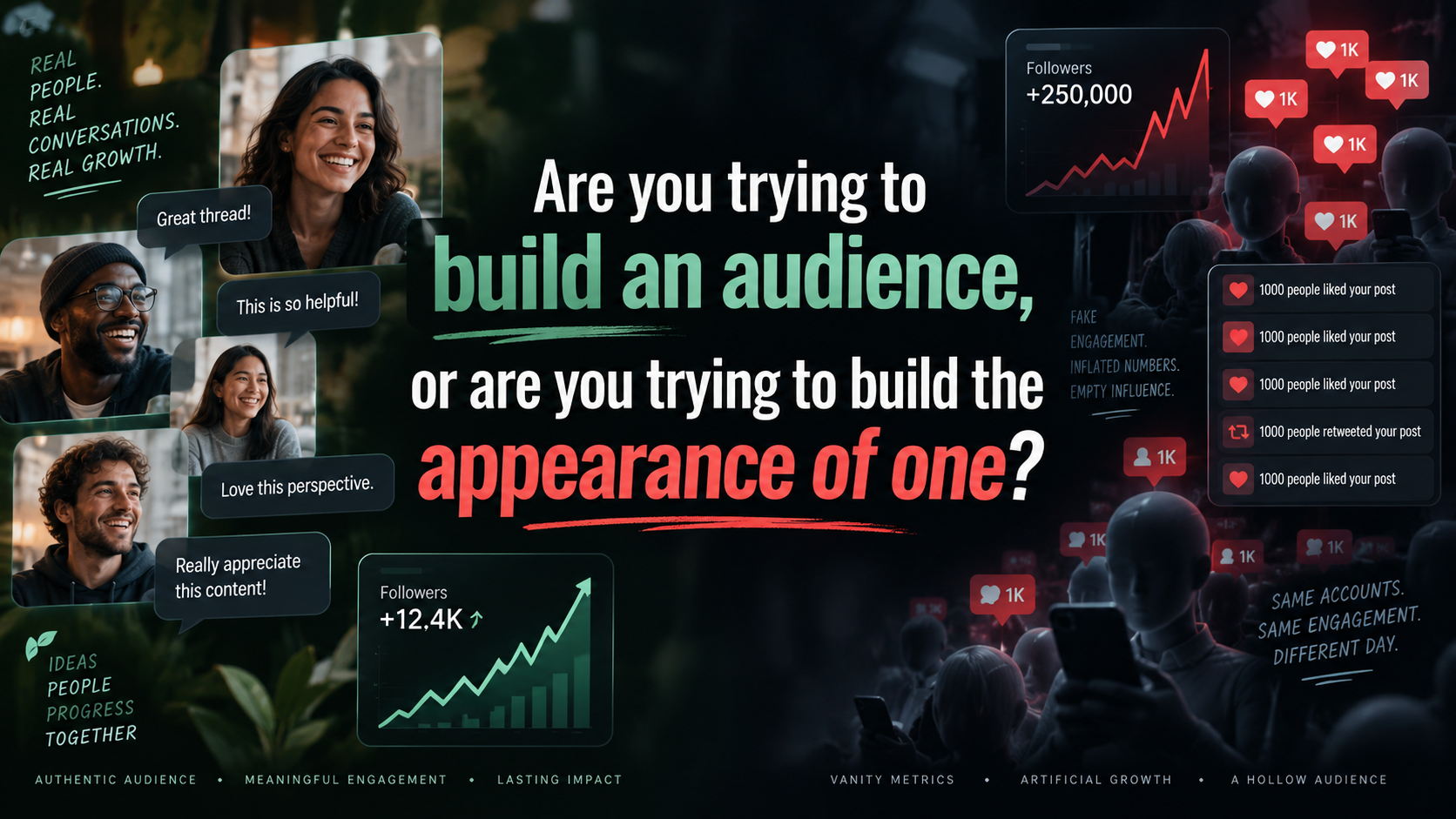
Are you trying to build an audience, or are you trying to build the appearance of one?
About The Author