For years, content creators have viewed the internet through a very simple lens: content is either “safe for work” (SFW) or “not safe for work” (NSFW).
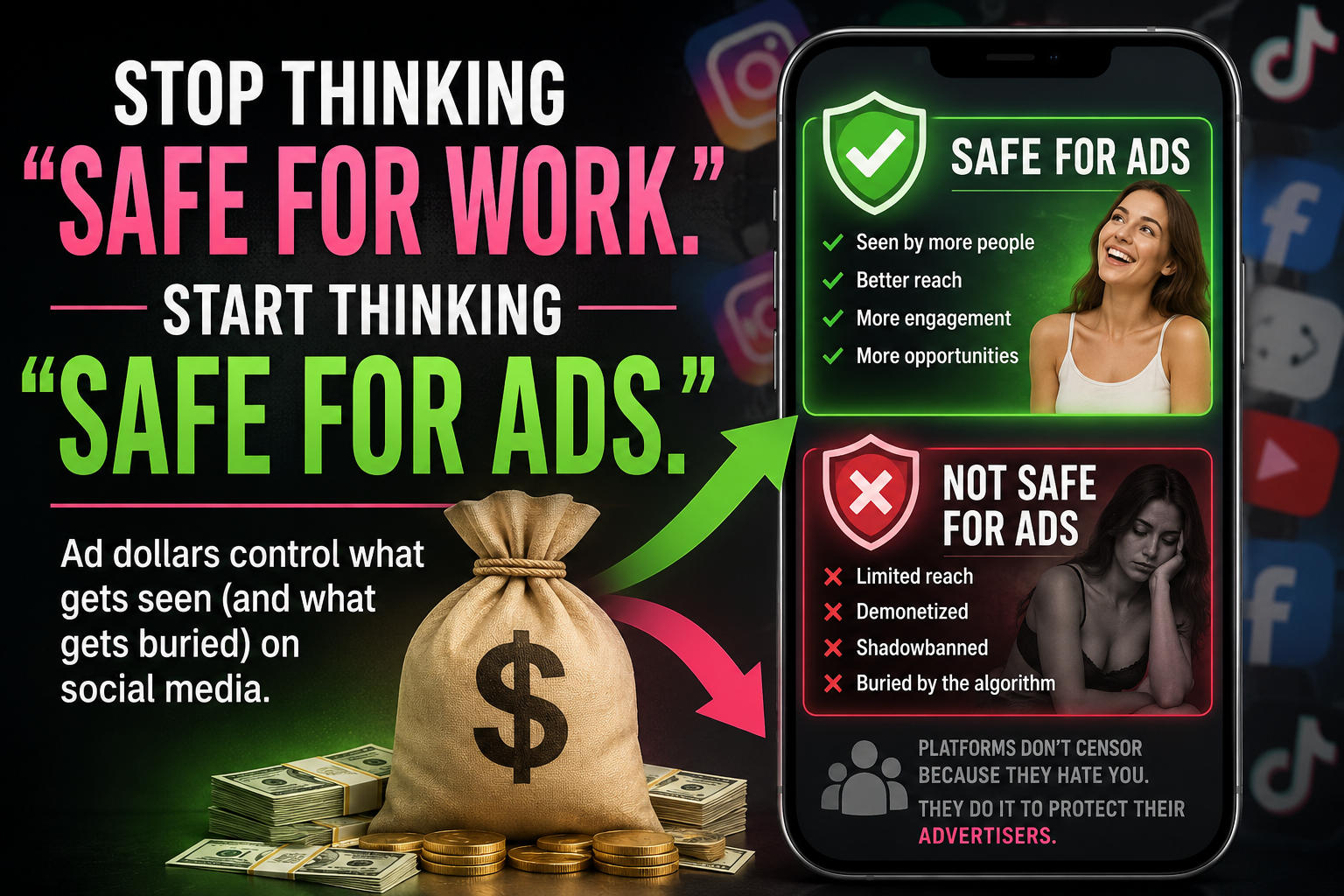
But that way of thinking is outdated. Today, content creators need to start thinking in entirely different terms: Safe for Ads and Not Safe for Ads.
Because whether your content gets seen or buried often has very little to do with nudity and almost everything to do with advertising.
Advertisers Control the Internet
Social media platforms are not charities. They are advertising companies.
Platforms like Instagram, Facebook, TikTok, X, and YouTube generate billions of dollars every year by selling advertising space. Their customers are not content creators.
Their customers are advertisers.
Companies like Coca-Cola, Nike, McDonald’s, Apple, and Procter & Gamble spend enormous amounts of money to place ads in front of users. In 2025 alone, global digital advertising spending is expected to exceed $700 billion.
And those companies care deeply about one thing: Brand safety.
Simply put, advertisers want to know that their ads won’t appear beside content that could damage their reputation.
Imagine you’re a major family brand spending millions of dollars on advertising. Would you want your ad appearing directly next to explicit adult content? Probably not. And that’s exactly the concern social media platforms face every single day.
The advertising industry has spent years developing standards around what is considered “brand safe.”
Entire organizations exist solely to define these standards. One of the most influential was the Global Alliance for Responsible Media (GARM), an industry initiative made up of major advertisers, agencies, and social media companies. GARM developed frameworks designed to classify which types of content are suitable for advertising and which are considered high risk.
Content categories frequently viewed as unsafe for advertisers include:
- Pornography and adult content
- Graphic violence
- Hate speech
- Extremism
- Illegal drugs
- Gambling
- Misinformation
- Certain controversial political topics
If your content falls into one of these categories, even partially, platforms may decide that your account presents an advertising risk.
And when advertisers become uncomfortable, platforms pay attention.
The YouTube “Adpocalypse” Changed Everything
If you think advertisers don’t influence platform policies, look no further than YouTube’s infamous “Adpocalypse.”
In 2017, major brands including AT&T, Verizon, PepsiCo, Walmart, and Johnson & Johnson discovered that their advertisements had been appearing alongside extremist and hate-filled videos on YouTube.
The reaction was immediate. Hundreds of advertisers either paused or pulled their advertising campaigns entirely. For YouTube, this represented a potential financial disaster.
The platform responded by rapidly tightening its advertiser-friendly content guidelines, expanding demonetization systems, and dramatically increasing moderation efforts. Countless creators suddenly found videos being demonetized, limited, or excluded from recommendations, even when they hadn’t technically broken any rules.
The message to platforms everywhere was unmistakable:
When advertisers complain, platforms change.
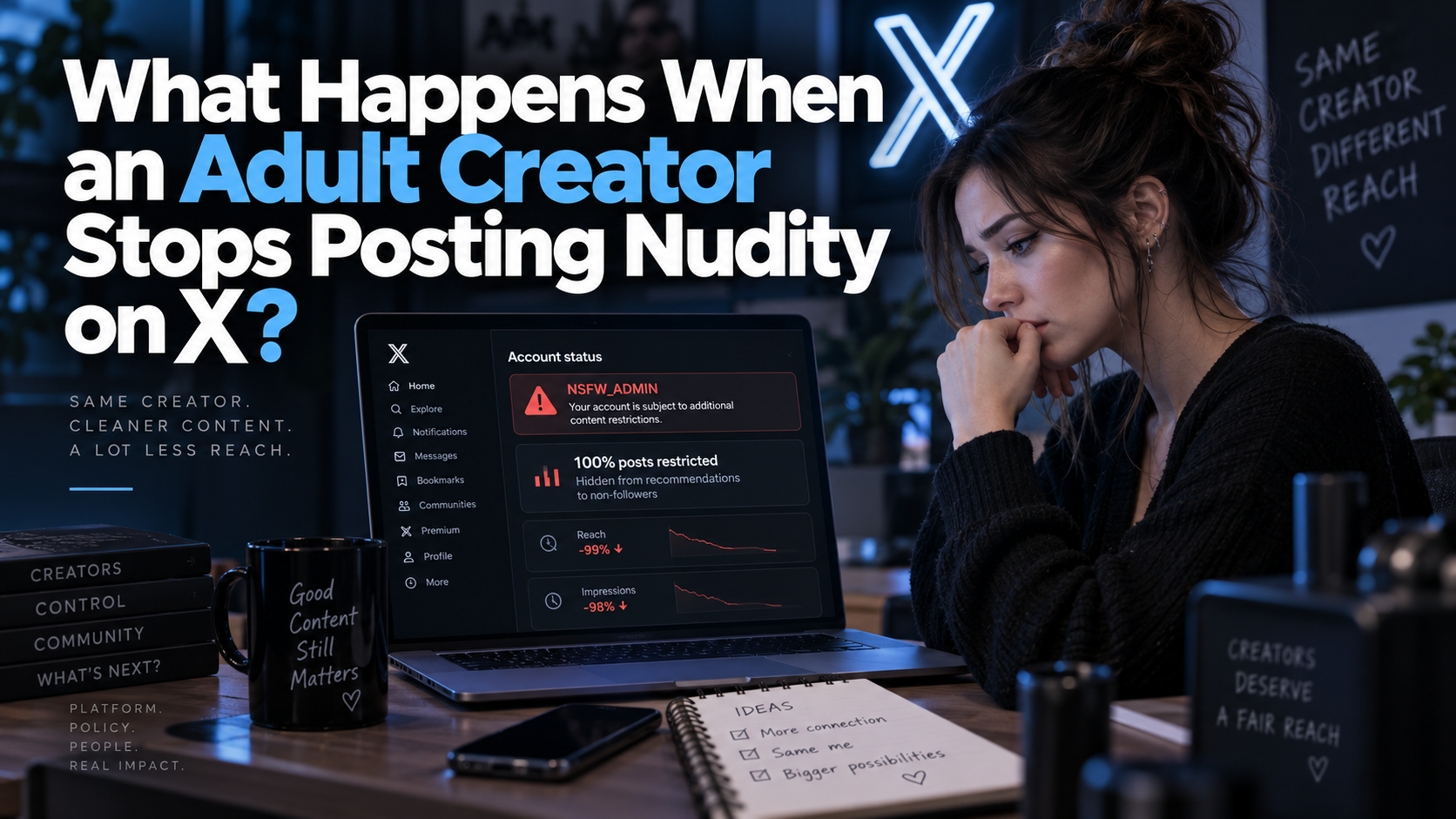
Many adult creators become frustrated because they aren’t posting nudity, yet their reach still declines.
The reason is simple: Platforms don’t just moderate explicit content. They moderate advertising risk.
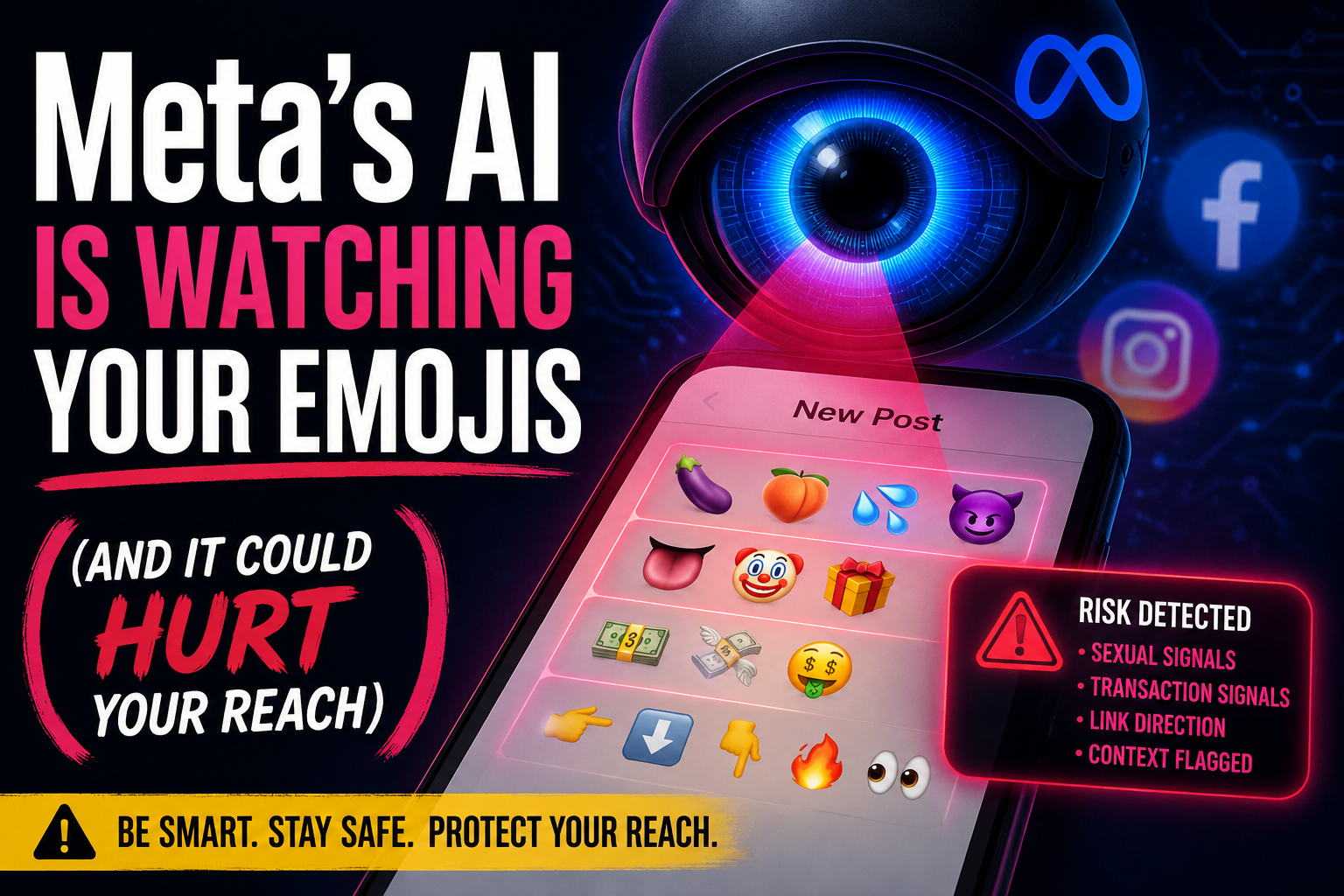
Even suggestive content, sexual language, lingerie photos, certain emojis, or links leading to adult websites can cause automated systems to classify an account as potentially unsafe for advertisers.
Once that happens, the platform may:
- Reduce your reach
- Remove recommendation eligibility
- Limit Explore page exposure
- Restrict monetization opportunities
- Deprioritize your posts in followers’ feeds
From the platform’s perspective, it is often safer to limit a creator’s distribution than risk upsetting advertisers.
For adult creators, this means that simply avoiding nudity may not be enough. You also have to think about how algorithms and advertisers may interpret your overall brand.
Academic researchers studying social media governance have increasingly concluded that advertiser demands play a major role in shaping platform moderation policies. As advertisers demand safer environments, platforms often adopt stricter and increasingly similar content rules in order to protect advertising revenue.
This helps explain why so many social platforms appear to be moving in the same direction when it comes to sexual content restrictions. It isn’t necessarily because executives personally dislike adult creators. It’s because advertisers generally do. And advertisers pay the bills.
Many creators believe social media platforms are designed to maximize creator success. They’re not. They’re designed to maximize advertising revenue. The algorithm’s job is not to make you famous.
Its job is to keep users engaged while simultaneously creating an environment that advertisers feel comfortable investing in.
That means creators viewed as “safe for ads” are often rewarded with greater visibility.
Creators viewed as “high risk” may see their distribution reduced, regardless of whether they technically violated any platform rules.
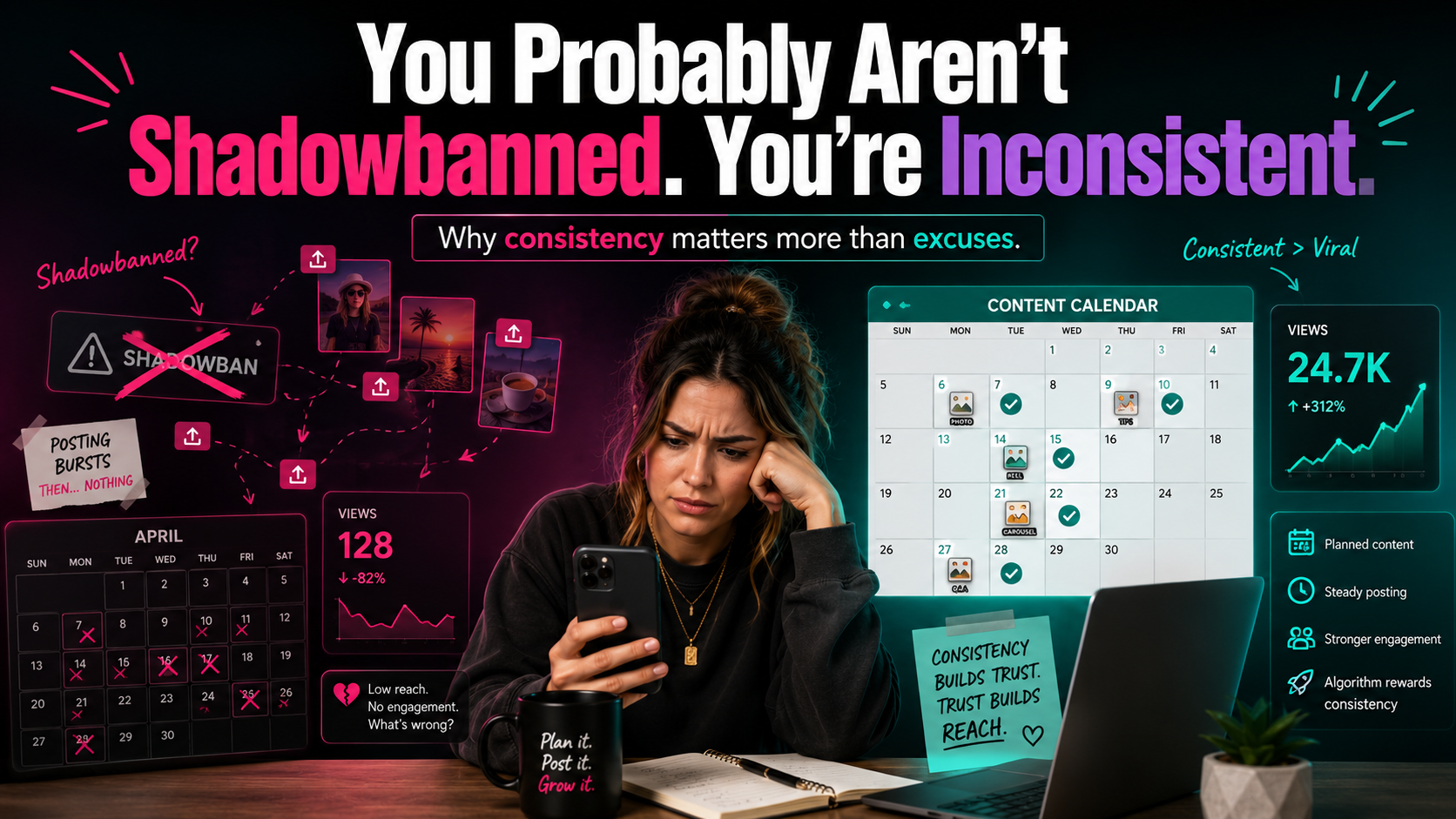
What creators commonly call a “shadowban” is frequently nothing more than a brand safety adjustment. The platform’s systems determine: “This account may not be ideal for advertisers.”
As a result, the account receives less exposure.
- No warning.
- No suspension.
- Just less reach.
For adult creators, understanding this distinction is crucial.
You may be completely compliant with a platform’s rules and still be considered less desirable from an advertising perspective.
What Can Content Creators Do?
You cannot control advertisers. But you can understand how platforms think.
Before posting, ask yourself:
- Would a Fortune 500 company feel comfortable placing an advertisement beside this content?
- Does this post rely heavily on sexual language or innuendo?
- Could this image be interpreted as overly explicit?
- Am I giving the platform reasons to classify my account as high risk?
The creators who thrive long term are often those who learn how to market themselves while staying as advertiser-friendly as possible.
The old question used to be: “Is this safe for work?”
The modern question is: “Is this safe for advertisers?”
Because on social media, the people controlling the advertising dollars ultimately control what gets amplified, what gets suppressed, and who gets seen.
Understanding that reality may be one of the most important lessons a creator can learn.
About The Author